
Home Articles Hiring & renting
Hiring & renting
How to research a landlord and a rental listing
Rental scams work because good homes go fast and people are rushed. A few checks, done in the right order, protect your deposit and your next year.
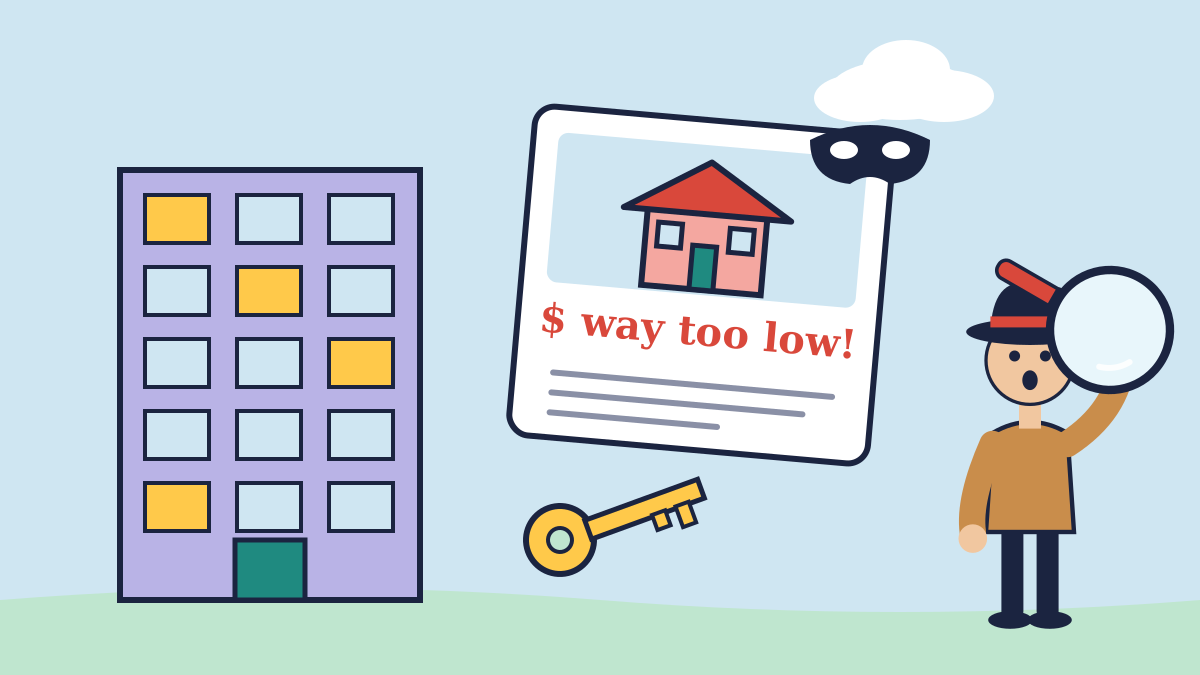
Renting involves two separate risks. The first is the outright scam: a listing for a home that is not available, advertised by someone who has no right to rent it, designed to collect a deposit and vanish. The second is slower: a real landlord who ignores repairs, keeps deposits unfairly or runs a building with a long record of violations. The checks below address both, and most can be done before you even book a viewing.
Step one: is the listing real?
Rental scammers often copy photos and descriptions from genuine listings, sometimes from homes that are for sale rather than for rent, and repost them at an attractive price. To catch this:
- Reverse image search the photos. Tools such as Google Lens or TinEye will show where else the images appear. If the same photos turn up on a sales listing, an estate agent’s site or a different rental ad with another contact name, stop.
- Search the address. Look for other listings of the same property with different prices or agents.
- Compare the rent. Check similar homes nearby. A price far below the local market is the bait in most rental scams.
- Look at the street. Street-level map imagery should match the photos.
Step two: who actually owns it?
In the US, property ownership is usually public. County assessor and recorder (or register of deeds) websites let you search an address and see the owner’s name. If the person advertising is not the owner, ask how they are connected. A property management company is common and legitimate; in many states, managing rentals for others requires a real estate licence, which you can look up with the state real estate commission. In the UK, HM Land Registry sells title register copies for a small fee, showing the registered owner.
Then confirm the person you are dealing with is who they say they are. A genuine landlord or agent will not be offended by a request to see identification that matches the ownership record, or to meet at the property.
Step three: view it properly
View in person if you possibly can, and make sure the person showing you around has keys and access. If you are relocating from far away and must view remotely, ask for a live video walk-through rather than a pre-recorded tour, and make specific requests on the call — open a particular cupboard, show the view from a named window, step outside to show the house number. Pre-recorded tours can be copied from elsewhere.
Be wary of any story that explains why you cannot see the inside: the owner is working abroad, the current tenant is difficult, the keys will be posted after payment. These stories exist to get your money before you discover the truth.
Stop signs: do not pay if…
- You are asked for a deposit or first month’s rent before viewing or signing a lease.
- Payment must be by wire transfer, money-transfer app, cryptocurrency or gift cards.
- The “landlord” cannot meet you and will send keys by post.
- The listing photos appear elsewhere under another name or price.
- The name does not match the property records and there is no management agreement.
- You are pressured to pay today because “many people are interested”.
Step four: research the landlord’s record
Once you know the listing is genuine, find out what living there is like.
- Talk to current or former tenants if you can. Ask how quickly repairs are handled and whether deposits were returned.
- Search housing and code-enforcement records. Many US cities publish building violations and complaints online, searchable by address. In the UK, some councils run landlord licensing schemes and publish public registers of licensed properties.
- Search court records. A landlord who files a very high number of evictions, or who is frequently sued over deposits, is worth knowing about.
- Read reviews of the management company using the approach in our guide to reading reviews critically.
Step five: read the lease and know the deposit rules
Read every page before signing, and never sign a lease with blank sections. Check the rent, the due date, late fees, what is included, who handles which repairs, rules on pets, guests and subletting, and how and when the lease can end. Ask for a move-in inspection checklist and photograph every room with dates before you unpack.
Deposit rules vary. Many US states cap security deposits and set a deadline for returning them after move-out, with an itemised list of deductions. In England and Wales, a deposit for an assured shorthold tenancy must be protected in a government-approved deposit protection scheme within 30 days, and the landlord must give you the scheme details. Landlords in England must also provide a current gas safety record and an Energy Performance Certificate. Check the rules for your state or country before you pay.
| Check | How | What a problem looks like |
|---|---|---|
| Listing is genuine | Reverse image search; search the address | Same photos elsewhere under another name |
| Advertiser has authority | County property records or Land Registry; agent licence | Name mismatch with no explanation |
| Home is as shown | In-person or live video viewing | Excuses for why you cannot see inside |
| Landlord’s record | Tenants, code violations, court records | Repeated violations or deposit disputes |
| Payment is protected | Traceable method, after signing | Wire, app transfer or gift card demanded |
Paying safely
Pay only after you have seen the property and signed a lease, and use a method that leaves a record in the landlord’s or agency’s business name. Get a receipt for every payment. If you are asked to pay by wire, gift card or cryptocurrency, treat it as a scam, whatever the explanation. Our guide to the safest ways to pay explains which methods give you options if something goes wrong.
Frequently asked questions
Is it normal to pay a holding deposit before signing?
In some markets, yes, but only after viewing and ideally with a written agreement about when it is refundable. Never pay one to someone whose identity and authority you have not confirmed.
How can I find out who owns a rental property?
In the US, search the address on the county assessor or recorder website. In England and Wales, you can buy a copy of the title register from HM Land Registry.
What if I'm moving from another city and can't view in person?
Ask a trusted local contact to view for you, or insist on a live video walk-through with specific requests, and only pay through a traceable method after signing.
Are rental listing websites responsible for fake listings?
Platforms remove fakes when reported, but they cannot catch them all. Report suspicious listings to the site and, in the US, to the FTC.
Related articles
Money & fine print
The safest ways to pay: which payments you can get back
Which payment methods let you recover money when a purchase goes wrong: credit cards, debit cards, payment apps, bank transfers, gift cards and crypto compared for the US and UK. Open the case file →
Hiring & renting
How to check a professional's licence and insurance
How to verify licences, registrations and insurance for contractors, electricians, gas engineers, agents, financial advisers and other professionals in the US and UK. Open the case file →
Reviews & records