
Shops & sellers
How to buy second-hand safely from private sellers
Second-hand buying is thrifty and greener. It is also where scammers hunt. These checks keep the bargain and lose the risk.
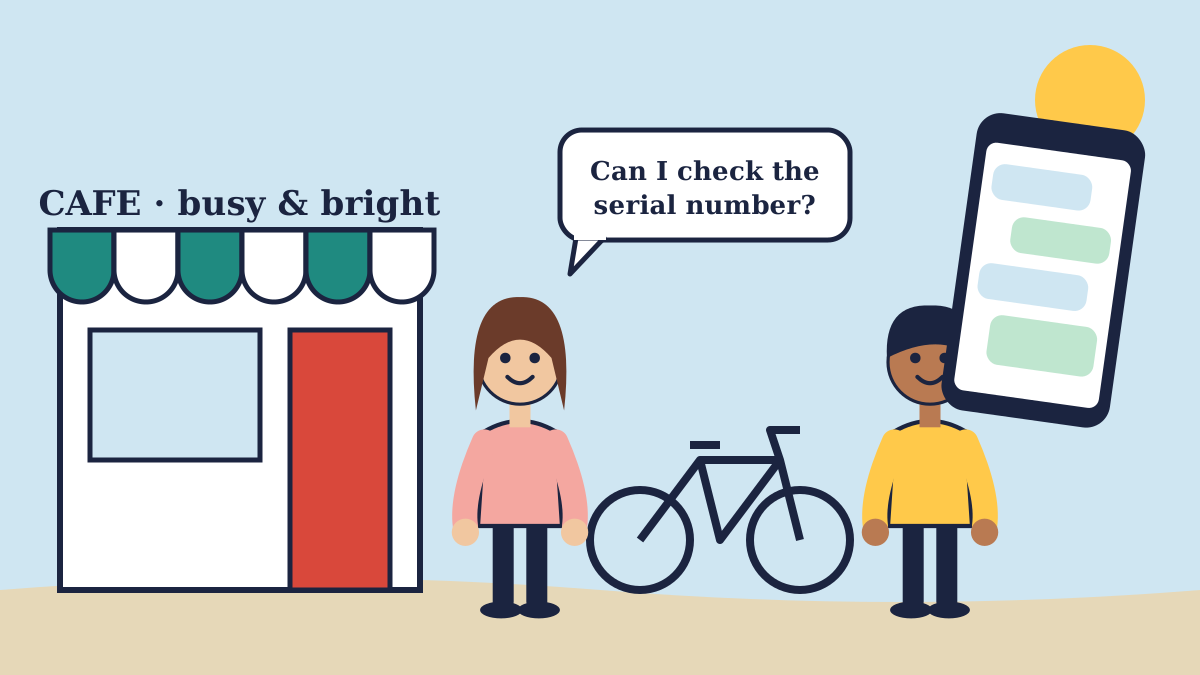
Marketplaces and classified ads connect you with private sellers who are, overwhelmingly, just people clearing out a cupboard. But private sales come with fewer protections than buying from a shop: in many places the item is sold “as seen”, there is no returns policy, and if the seller disappears there is nobody to complain to. That makes the research you do before paying especially important.
Research the seller
On platforms with profiles and ratings, look at how long the account has existed, what else it has sold, and what buyers have said. A brand-new profile is not automatically suspicious — everyone starts somewhere — but a new profile selling a high-demand item cheaply deserves extra caution. Look at the photos: do they look like the seller’s own home, or like stock images and screenshots from other listings? A reverse image search can show whether the pictures have been lifted from elsewhere.
Keep all communication on the platform. Sellers who push to move to text, email or another messaging app are often trying to get you away from the platform’s monitoring and buyer protection.
Research the item
- Price check. Look at completed or sold listings for the same model to see what it really goes for. A price far below that is the lure in many scams.
- Serial numbers. Ask for a photo of the serial number or model label before you travel. For bikes, search stolen-bike registries (such as Bike Index in the US or BikeRegister in the UK). For phones, the IMEI number can be checked against blocklists of phones reported lost or stolen; in the US, the industry body CTIA runs a free stolen phone checker.
- Recalls. Look up the model on the relevant recall list, especially for baby gear, toys, heaters and anything with a battery. Our guide to checking product recalls lists where.
- Activation locks. Phones, tablets, laptops and smartwatches can be tied to the previous owner’s account. Ask the seller to sign out and reset the device in front of you, and confirm it reaches the setup screen without asking for someone else’s login.
Know the common scams
| Scam | How it works | Your move |
|---|---|---|
| Advance payment | Seller asks for payment or a deposit before you see the item, then vanishes. | Pay on collection, or only through the platform’s protected checkout. |
| Fake shipping or escrow | Seller sends a link to a “courier” or “escrow” site that looks official but is fake. | Only use services you navigate to yourself; never pay through a link from the seller. |
| Overpayment (as seller) | Buyer “accidentally” pays too much and asks for the difference back; the original payment later bounces. | Refuse; refund only through the same channel after funds truly clear, or cancel. |
| Verification code | Other party asks you to read out a code sent to your phone “to prove you are real”. | Never share codes; they are used to take over your accounts or set up numbers in your name. |
| Fake payment email | You receive an email that looks like a payment confirmation, but no money arrived. | Check your balance in the app or bank itself, not the email. |
Meet safely and inspect properly
Meet in a busy, well-lit public place during the day. Many police stations in the US and UK are happy for their lobbies or car parks to be used for exchanges, and some have designated safe-exchange zones. Bring someone with you for anything valuable, and tell someone else where you are going. For large items that must be collected from a home, go with a friend.
Take your time inspecting. Plug it in, switch it on, check every function you care about, and compare the serial number with the photo you were sent. Bring what you need to test it — a charger, headphones, a tyre pump. A genuine seller expects this; someone who hurries you along or refuses a basic test is giving you information.
Private purchase checklist
- Seller profile and history checked; chat kept on the platform.
- Price compared with recent sold listings.
- Serial, IMEI or model number checked for theft and recalls.
- Public meeting place chosen; someone knows where you are.
- Item tested in person; device reset and unlocked in front of you.
- Payment made in a way that matches the risk (see below).
- Receipt or message confirming price, item and serial number saved.
Pay in a way that matches the risk
For in-person collection, cash or an instant bank payment made once you have inspected the item is common and reasonable, because you only pay when the item is in your hands. For anything posted, use the platform’s own checkout if it offers buyer protection, or a payment service’s purchase protection option. Avoid “friends and family” payment options for purchases from strangers: they are designed for sending money to people you know and usually carry no buyer protection. Never pay with gift cards or cryptocurrency. See the safest ways to pay for a comparison.
Get it in writing
Ask the seller for a simple written receipt, or send a message through the platform confirming the item, serial number, price and date. It costs nothing, it gives you a record if the item turns out to be stolen or misdescribed, and a legitimate seller will not mind. For vehicles, there are more steps; see our guide to checking a used car’s history.
Frequently asked questions
Is it safe to pay a deposit to hold an item?
It is risky with a stranger, because you have no way to get it back if they disappear. If you must, keep it small and pay through a method with protection.
Should I pay cash on collection?
For in-person sales where you inspect the item first, cash or an instant bank payment at the time of handover is common. The key is that you only pay once you have the item.
Why does the seller want my phone number verification code?
This is a common scam. The code lets them take over one of your accounts or register a service in your name. Never share verification codes with anyone.
What if the item turns out to be stolen?
Contact the police with your receipt and messages. Stolen goods may be returned to the owner, which is another reason to check serial numbers before buying.
Related articles
Reviews & records
How to check for product recalls before (and after) you buy
Where to check recalls for products, cars, car seats, food and medicines in the US, UK, EU and Canada, and what to do if something you own is recalled. Open the case file →
Money & fine print
The safest ways to pay: which payments you can get back
Which payment methods let you recover money when a purchase goes wrong: credit cards, debit cards, payment apps, bank transfers, gift cards and crypto compared for the US and UK. Open the case file →
Shops & sellers