
Shops & sellers
How to check a used car's history before you buy
A car’s past is written down in more places than most buyers realise. Here is how to read it before the seller’s story does the talking.
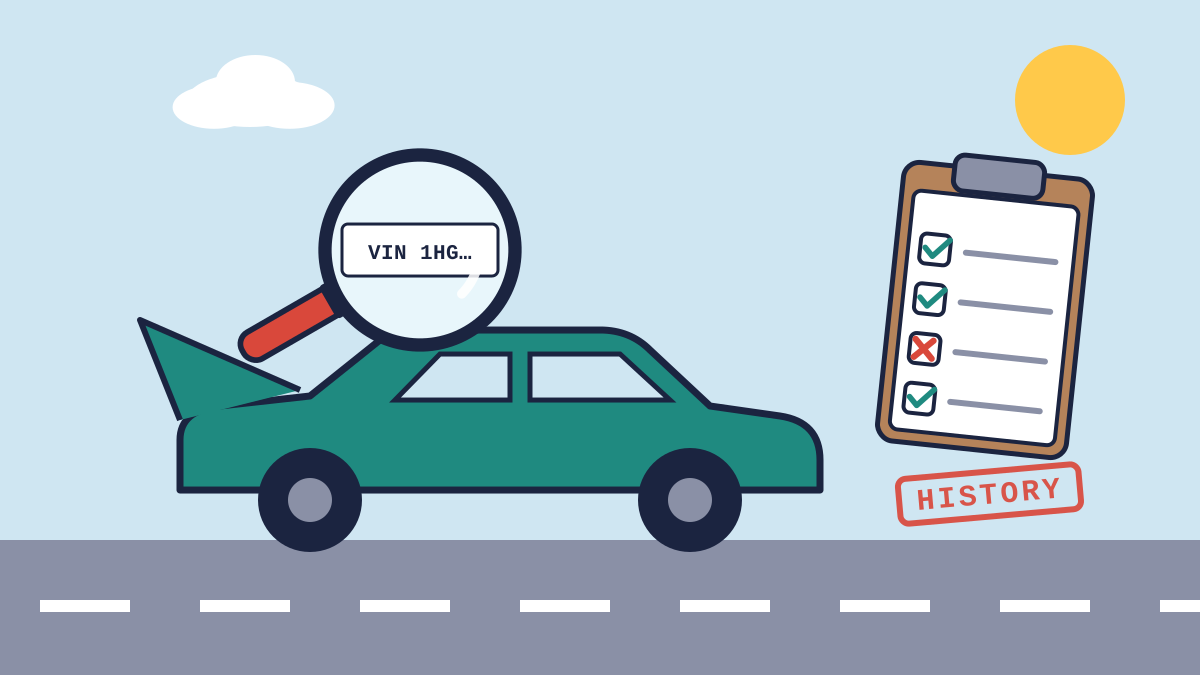
A used car is often the second-biggest purchase people make, and it is one where the seller usually knows far more than the buyer. Fortunately, cars carry a unique identity number and generate official records throughout their lives: registrations, inspections, insurance write-offs, recalls and finance agreements. Checking those records before you pay can reveal hidden damage, theft, clocked mileage or money still owed on the car.
Find and match the VIN
Every modern car has a 17-character vehicle identification number. It is usually visible through the windscreen on the driver’s side of the dashboard, and printed on a label in the driver’s door frame. It also appears on the title or registration documents and on insurance paperwork. Before anything else, check that the VIN matches in every place. A mismatch, or a VIN plate that looks tampered with, is a reason to walk away.
In the UK, the registration (number plate) is the everyday reference for checks, but the VIN still matters: compare it with the V5C registration certificate (the logbook).
Run the official checks (United States)
- NMVTIS. The National Motor Vehicle Title Information System is a federal database that collects title and brand information from states, insurers and salvage yards. Reports are sold cheaply by approved providers listed on the official site, vehiclehistory.gov. They can reveal title brands such as salvage, rebuilt, flood or junk.
- NICB VINCheck. The National Insurance Crime Bureau offers a free lookup that shows whether a car has been reported stolen and not recovered, or declared a total loss by participating insurers.
- NHTSA recalls. Search the VIN at nhtsa.gov/recalls to see unrepaired safety recalls. Recall repairs are free at franchised dealers.
- Commercial history reports. Paid reports can add accident, service and ownership records. They are useful, but they only contain what was reported to them; an accident repaired privately may never appear.
Run the official checks (United Kingdom)
- DVLA vehicle enquiry. Free on GOV.UK: confirms make, colour, tax status and first registration date match what you have been told.
- MOT history. Also free on GOV.UK for cars old enough to need an MOT. It shows every test result, failures and advisories, and the mileage recorded at each test — a simple way to spot a mileage figure that goes backwards.
- Vehicle recall check. The DVSA recall checker shows outstanding safety recalls.
- Private history check. Paid checks from commercial providers show whether the car has outstanding finance, has been recorded as an insurance write-off (categories such as Cat S or Cat N), or is recorded as stolen. Outstanding finance matters: if a car is still owned by a finance company, it may not legally be the seller’s to sell.
| What you want to know | US check | UK check |
|---|---|---|
| Is it stolen? | NICB VINCheck; NMVTIS | Private history check; police |
| Was it written off or flooded? | NMVTIS title brands; NICB | Private history check (Cat S/N) |
| Is money owed on it? | Title shows lienholder; ask for lien release | Private history check (outstanding finance) |
| Is the mileage genuine? | Title and service records; history report | Free MOT history mileage readings |
| Are recalls outstanding? | NHTSA VIN search | DVSA recall check |
Read the paperwork
Ask to see the title (US) or V5C (UK) and check that the seller’s name and address match their identification and the place you are viewing the car. Be cautious of sellers who want to meet in a car park rather than at their home, or who say the documents are “in the post”. In the US, a title that lists a lienholder means a lender still has an interest in the car; you need proof the loan is paid off.
Service records, receipts and inspection certificates help confirm mileage and care. Gaps are not unusual, but a detailed story with no paperwork to back it up deserves questions.
Get an independent inspection
History checks tell you what was recorded. A pre-purchase inspection by an independent mechanic you choose tells you what condition the car is actually in. Arrange it before paying, at a garage that is not connected to the seller. A seller who refuses a reasonable inspection is giving you a clear answer. At a minimum, take a test drive covering different speeds, check all the electrics, and look for signs of flood damage: damp or musty carpets, silt under seats or in the spare wheel well, and rust in unusual places.
Used car checklist
- VIN matches on dashboard, door frame and documents.
- Official theft, title or write-off and recall checks run.
- Mileage consistent with records (MOT history in the UK).
- Seller’s identity matches the title or logbook and the address.
- No outstanding loan or finance, or proof it will be cleared.
- Independent inspection and a proper test drive completed.
Dealer versus private sale
In the US, dealers must display the FTC’s Buyers Guide on used cars, stating whether the car is sold with a warranty or “as is”. The guide becomes part of the sales contract. Private sellers are not covered by that rule, and private sales generally carry fewer legal protections in both the US and UK. In the UK, buying from a dealer gives you rights under the Consumer Rights Act 2015 — goods must be of satisfactory quality, as described and fit for purpose — while a private seller mainly has to describe the car accurately.
Whichever route you take, pay in a way that leaves a record, and never transfer money before you have seen the car, checked the documents and have the keys in hand. See the safest ways to pay.
Frequently asked questions
Is a free history check enough?
Free checks cover important basics such as theft, total-loss records and recalls. A paid report or a UK private check adds finance and more detail. Neither replaces an independent inspection.
What does a salvage or rebuilt title mean?
It means the car was declared a total loss at some point, often by an insurer. Some are repaired well; others are not. Such cars can be harder to insure and resell, so price and inspect accordingly.
How can I tell if a mileage reading is fake?
Compare it with service records, inspection records and, in the UK, the free MOT history. Wear on the pedals, steering wheel and driver's seat that seems heavy for the mileage is another clue.
Can I buy a car with outstanding finance?
Only with great care. In many cases, the lender still owns it. Insist on the loan being settled, with written confirmation, before or at the time of sale.
Related articles
Reviews & records
How to check for product recalls before (and after) you buy
Where to check recalls for products, cars, car seats, food and medicines in the US, UK, EU and Canada, and what to do if something you own is recalled. Open the case file →
Shops & sellers
How to buy second-hand safely from private sellers
How to research private sellers on marketplaces, check items for theft and recalls, avoid overpayment and verification-code scams, meet safely and pay with protection. Open the case file →
Money & fine print