
Home Articles Reviews & records
Reviews & records
How to check for product recalls before (and after) you buy
Recall lists are free, official and surprisingly underused. A two-minute search can stop you buying, or keep using, something that has been pulled for safety.
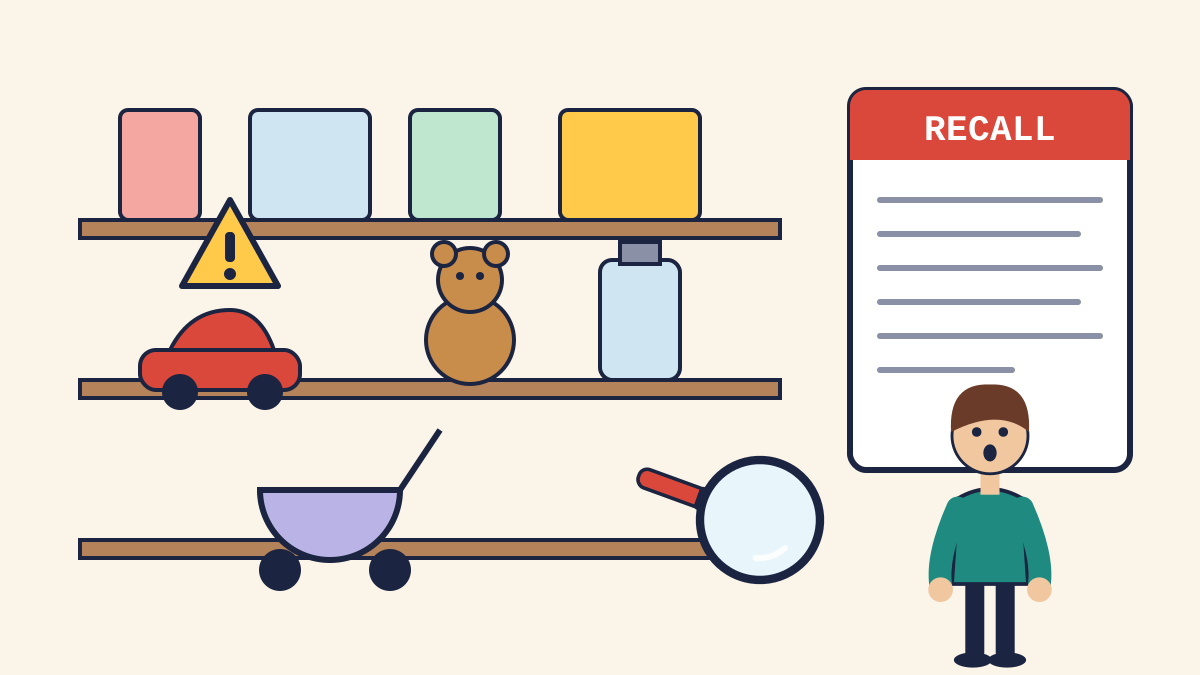
When a product is found to have a safety defect, the manufacturer usually announces a recall with a remedy: a refund, a repair or a replacement. The trouble is that recall notices reach only a fraction of owners, and recalled products keep circulating in second-hand listings, discount stores and online marketplaces. Checking takes a couple of minutes and is especially worthwhile for anything a child will use, anything that heats up or holds a charge, and anything with wheels.
Where to check in the United States
US recalls are split between agencies by product type. The federal portal Recalls.gov links to all of them, but it helps to know which one you need.
- Consumer products (toys, furniture, appliances, electronics, baby gear other than car seats): the Consumer Product Safety Commission at cpsc.gov/Recalls. Its sister site, SaferProducts.gov, also publishes reports of harm submitted by the public, which can reveal problems before a recall exists.
- Vehicles, tyres, car seats and motor-vehicle equipment: the National Highway Traffic Safety Administration at nhtsa.gov/recalls, where you can search by vehicle identification number.
- Food, medicines, medical devices and cosmetics: the Food and Drug Administration’s recalls page.
- Meat, poultry and processed egg products: the USDA Food Safety and Inspection Service.
- Boats and boating equipment: the US Coast Guard.
Where to check in the UK, EU and Canada
- UK: the government’s product recalls and alerts list on GOV.UK (run by the Office for Product Safety and Standards); the Food Standards Agency for food alerts; and the DVSA vehicle recall checker for cars, motorbikes and equipment.
- EU: Safety Gate, the EU rapid alert system for dangerous non-food products, publishes weekly alerts across member states.
- Canada: the Government of Canada’s Recalls and Safety Alerts site covers consumer products, food, vehicles and health products.
| Product type | United States | United Kingdom |
|---|---|---|
| Toys, furniture, appliances | CPSC | GOV.UK product recalls (OPSS) |
| Cars, tyres, car seats | NHTSA (search by VIN) | DVSA vehicle recall check |
| Food | FDA; USDA FSIS for meat and poultry | Food Standards Agency alerts |
| Medicines and medical devices | FDA | MHRA alerts |
| Everything, one place | Recalls.gov | GOV.UK product safety alerts |
How to search effectively
Recalls are usually defined by model number, batch or lot code, and a date range — not just the product name. Before you search, find the label: on the underside of appliances, inside the battery compartment of toys, on the frame of strollers and cots, and on the base or side of car seats. Search the brand first, then narrow down using the model number. If a recall covers some production dates but not others, compare the date code on your item carefully.
For vehicles, always search by the full vehicle identification number rather than make and model, because recalls often apply only to cars built at certain plants or dates. Our used-car history guide explains where to find it.
Be extra careful with second-hand items
A lot of recalled products change hands privately, often by sellers who simply do not know. In the US, federal law prohibits selling a consumer product that is subject to a CPSC recall, and that applies to resellers as well as shops — but enforcement against individual sellers is rare, so the check is on you. Before buying used baby gear, ask for the model number and manufacture date and look them up before you travel to collect it.
Car seats deserve special care. Beyond recalls, most manufacturers print an expiry date on the seat, and they generally advise against using a seat that has been in a crash. You usually cannot verify crash history from a stranger, which is why many child-safety organisations recommend buying car seats new or only from someone you know well.
Recall check before you buy
- Photograph the label with the model number and date or lot code.
- Search the right agency for the product type (or the all-in-one portal).
- For vehicles and car seats, search by VIN or exact model and date.
- Check the manufacturer’s own safety or recall page as well.
- For second-hand items, ask the seller for the label photo before you travel.
If something you own is recalled
Stop using it unless the notice says otherwise, and follow the remedy described in the recall notice. Recall remedies are provided free of charge, and you generally do not need the original receipt; the manufacturer may ask for proof that you have the product, such as a photo of the label or a cut cord. For vehicles, franchised dealers carry out recall repairs free even if you bought the car second-hand.
To hear about future recalls, register new products with the manufacturer (the registration card or online form exists for this purpose, and the information collected for safety notices is usually limited), and sign up for email alerts from the relevant agency. If you experience a safety problem that is not yet recalled, report it — in the US to SaferProducts.gov or NHTSA, in the UK via Citizens Advice or the DVSA. Those reports are one of the ways recalls start.
Frequently asked questions
Do I need a receipt to get a recall remedy?
Usually not. Recall remedies are generally free and tied to the product itself. The manufacturer may ask for proof you have it, such as a photo of the model label.
Can I sell a recalled item if I disclose it?
In the US, selling a consumer product that is under a CPSC recall is prohibited. Follow the recall remedy instead. Rules vary elsewhere, but selling a known dangerous product is never a good idea.
Will I be told automatically if something I own is recalled?
Only if the manufacturer has your details, for example from product registration or a vehicle's registration records. Many recalls rely on public notices, so it is worth checking yourself.
Are recall checks worth it for cheap items?
For anything a child uses, anything with a battery or heating element, and anything with wheels, yes. The check is quick and free.
Related articles
Shops & sellers
How to buy second-hand safely from private sellers
How to research private sellers on marketplaces, check items for theft and recalls, avoid overpayment and verification-code scams, meet safely and pay with protection. Open the case file →
Shops & sellers
How to check a used car's history before you buy
How to check a used car's VIN, title, recalls, theft and write-off records, mileage history and condition in the US and UK, plus private-sale and dealer tips. Open the case file →
Money & fine print