
Home Articles Money & fine print
Money & fine print
Warranties and return policies: read the fine print first
What happens when a purchase goes wrong is decided before you buy it. Here is how to read the fine print that matters.
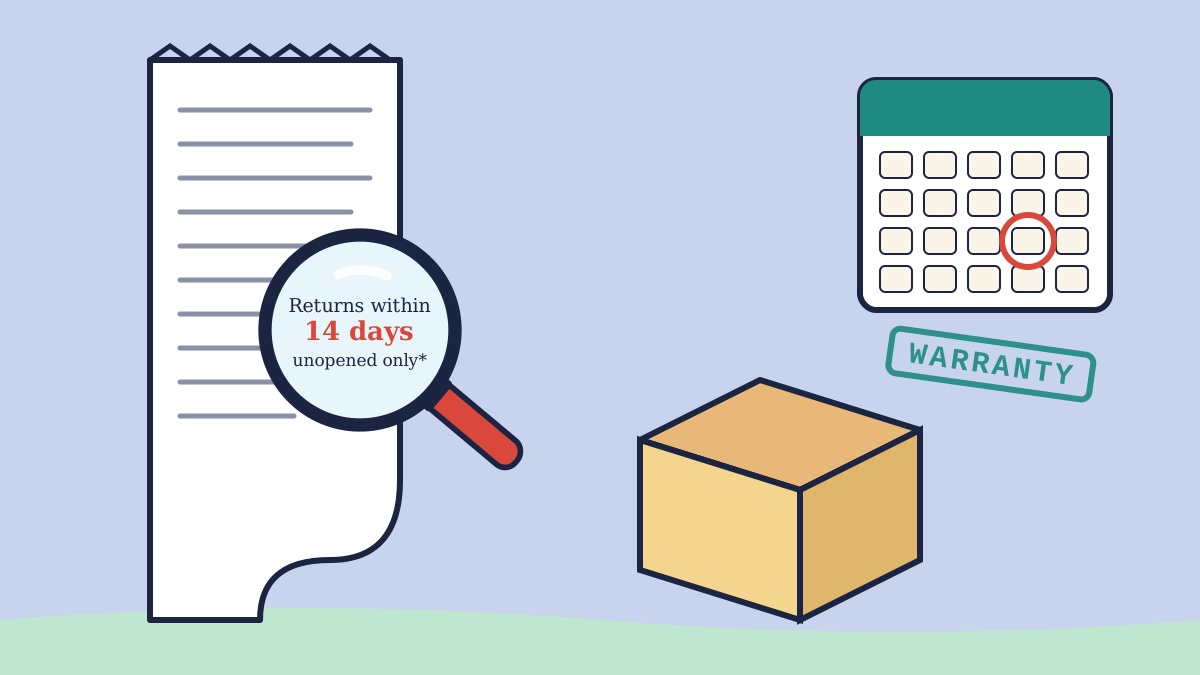
Most people read the returns policy after something has gone wrong. By then, the conditions that decide the outcome — how many days you have, whether the box must be unopened, who pays for return postage — are already fixed. Two minutes of reading before you buy can make the difference between a smooth refund and an argument. This guide separates the different layers of protection and what to check in each.
Know the layers of protection
When you buy something, several different things may protect you, and they are easy to confuse:
| Layer | Who provides it | What it usually covers |
|---|---|---|
| Store return policy | The retailer | Changing your mind within a set period, on the retailer’s terms |
| Manufacturer’s warranty | The maker | Defects within a stated period; repair, replacement or refund |
| Statutory rights / implied warranties | The law | Goods that are faulty, not as described or unfit for purpose |
| Extended warranty or service contract | Retailer or third party, for a fee | Repairs after the manufacturer’s warranty, subject to exclusions |
| Card or payment protection | Your card issuer or payment service | Disputes over goods not received or not as described |
Return policies: what to check
In the US, there is no general federal law that gives you the right to return an item simply because you changed your mind; returns are largely governed by each store’s policy, and some states require stores to display that policy. So read it before you buy, especially for expensive or large items. Check:
- The return window, and whether it starts at purchase or delivery.
- Whether you get a refund to your original payment, store credit or an exchange only.
- Restocking fees, particularly for electronics and large items.
- Condition rules: unopened, with all packaging, tags attached.
- Exceptions: final sale, clearance, custom orders, opened software or hygiene items.
- Who pays return shipping, and where returns must be sent.
For online orders from sellers you do not know, the return address is revealing. A shop that appears local but requires returns to another country at your cost has effectively made returns impractical. See our guide to checking an online store.
In the UK and EU, the rules are more generous by law. Under the UK Consumer Contracts Regulations, most goods bought online or by phone from a business can be cancelled within 14 days of delivery for any reason, with a refund due within 14 days of the goods being returned (or evidence of return). Exceptions include personalised items, perishable goods and sealed hygiene products once unsealed.
Manufacturer warranties: full, limited and your rights
In the US, written warranties on consumer products are governed by the Magnuson-Moss Warranty Act. Warranties on products costing more than a small threshold must be clearly labelled as “full” or “limited”, and you have the right to read the warranty before buying — ask to see it in store, or look for it on the product page. A “full” warranty carries stronger obligations, such as repairing within a reasonable time without charge. Most warranties are “limited”, so read what is excluded: labour, shipping, wear parts, commercial use, or damage from accidents.
The same law generally stops a manufacturer from voiding your warranty just because you used third-party parts or an independent repairer, unless it provides those parts or services free or has obtained an exemption. The manufacturer can still refuse to cover damage actually caused by those parts or that repair.
Keep proof of purchase and register the product if registration is offered. Registration is not normally required to keep the warranty valid, but it can make claims simpler and means you hear about recalls.
Implied warranties and statutory rights
In most US states, goods sold by a merchant come with an implied warranty of merchantability — essentially, that the product does what such products ordinarily do. Sellers can often disclaim implied warranties by clearly selling “as is”, although some states restrict this.
In the UK, the Consumer Rights Act 2015 says goods from a business must be of satisfactory quality, fit for purpose and as described. These rights cannot be removed by a store policy. If goods are faulty, you generally have 30 days to reject them for a full refund; after that, the retailer usually gets one chance to repair or replace. If a fault appears within six months of delivery, it is presumed to have been there at delivery unless the retailer proves otherwise. Your claim is against the retailer, not the manufacturer.
Extended warranties: worth it?
Extended warranties and service contracts are optional insurance sold at the checkout. Before buying one, check whether it overlaps with the manufacturer’s warranty (often it does in the first year), what is excluded, who handles claims, whether there is a deductible, and whether you can cancel for a refund. Some credit cards extend manufacturer warranties automatically as a card benefit, so check your card terms first. For many inexpensive items, the cost of the contract is a large fraction of the item’s price, and setting aside the money yourself may make more sense.
Keep a paper trail
Photograph receipts, save order confirmations and screenshot the product page and returns policy at the time of purchase, since online policies can change. If you need to return or claim, put it in writing, keep copies, and note dates. If the seller will not honour its obligations, your card issuer, payment provider or a consumer body may be able to help; see the safest ways to pay for how card disputes work.
Frequently asked questions
Do US stores have to accept returns?
Generally no, if the item is not faulty. Returns for change of mind are governed by the store's own policy, so check it before buying. Faulty goods may be covered by warranties.
Does using an independent repair shop void my warranty?
In the US, a manufacturer generally cannot void a warranty just because you used a third-party repairer or parts, unless it provides them free. It can deny claims for damage those repairs caused.
How long do I have to return something bought online in the UK?
For most goods bought online from a business, you can cancel within 14 days of delivery, then have a further 14 days to send the goods back. Some items are excluded.
Is an extended warranty the same as a warranty?
No. It is usually a separate service contract, often from a third party, with its own terms and exclusions. Read those terms before paying.
Related articles

Money & fine print
The safest ways to pay: which payments you can get back
Which payment methods let you recover money when a purchase goes wrong: credit cards, debit cards, payment apps, bank transfers, gift cards and crypto compared for the US and UK. Open the case file →
Reviews & records
How to research a company before you do business with it
Where to check a company's registration, age, address, complaints, court cases and regulatory status before you hand over money, in the US and UK. Open the case file →
Shops & sellers