
Home Articles Reviews & records
Reviews & records
How to research a company before you do business with it
A logo and a website cost almost nothing. A registered, traceable business with a track record is much harder to fake. Here is how to tell the difference.
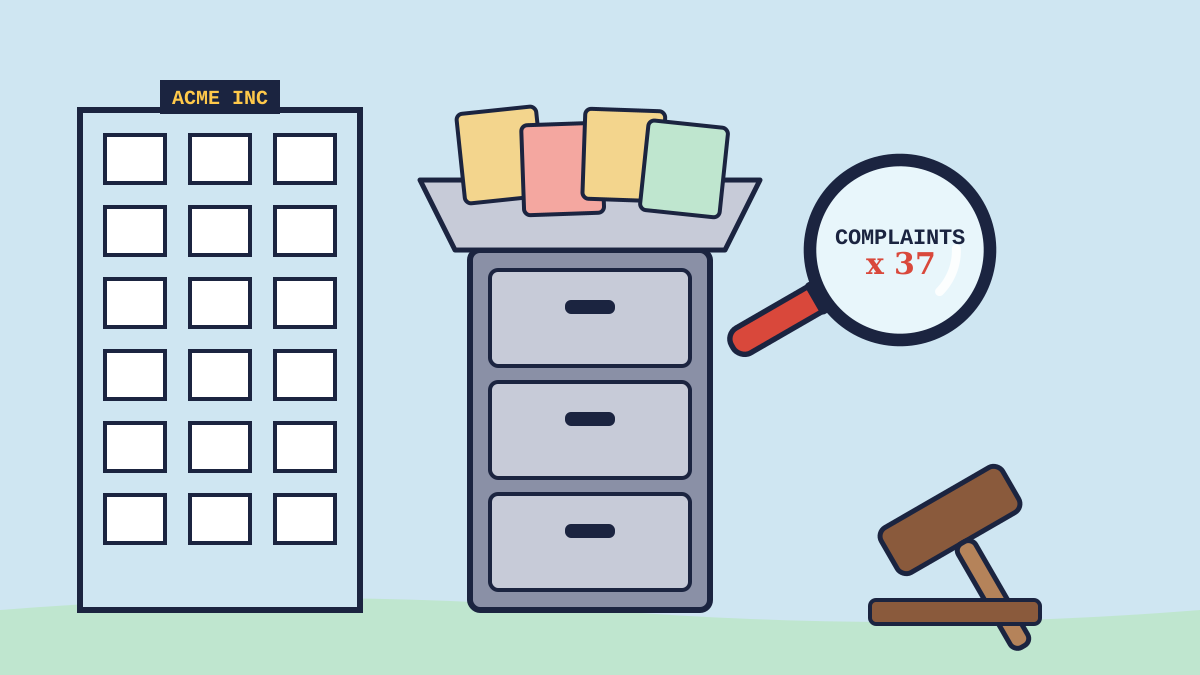
Whether you are hiring a moving company, signing up for a course or ordering an expensive item from a firm you have not used before, the question is the same: is this a real, established business that deals fairly with its customers? You can answer most of that yourself, for free, using public records. This guide walks through the checks in the order we would do them.
Confirm the business legally exists
Start with the exact legal name. It is often different from the brand name, and it usually appears in the small print at the bottom of a website, in the terms and conditions, or on an invoice. If you cannot find a legal name anywhere, that is your first warning.
In the United States, most businesses that operate as a corporation or LLC register with the Secretary of State (or equivalent office) in the state where they were formed. Each state has a free online business entity search. It will usually show the formation date, the registered agent, the status (active, dissolved, delinquent) and sometimes the officers. Sole traders may instead file a “doing business as” name with their county. In the United Kingdom, Companies House has a free search that shows incorporation date, registered office, directors, filing history and whether accounts or confirmation statements are overdue.
What to look for: a formation date that fits the story the business tells (“serving customers for 20 years” should not belong to a company formed last spring), an active status, and names and addresses that match what you have been given.
Check the address and the people
Put the business address into a map with street-level imagery. A shop, office or workshop is reassuring. A mailbox store, a residential flat in another country, or a building that houses hundreds of registered companies is not automatically a scam — many small firms use registered-office services — but it means the address tells you nothing, and you should lean harder on other checks.
Search the names of directors or owners alongside words like “complaint”, “lawsuit” or “fraud”. In the UK, Companies House also lists other companies each director has been involved in; a trail of recently dissolved companies in the same trade is a pattern worth noticing.
Look for complaints and how they were handled
No business has zero complaints. What matters is the volume relative to the size of the business, whether the complaints describe the same problem, and whether they were resolved.
- Better Business Bureau (US and Canada). Lists complaints and business responses. Remember that BBB accreditation is a paid membership and its letter grades are its own assessment, not a government rating; read the complaint text rather than relying on the grade.
- CFPB Consumer Complaint Database (US). For banks, lenders, debt collectors, credit reporting and other financial products, the Consumer Financial Protection Bureau publishes complaints and company responses.
- State attorney general and local consumer affairs offices (US). Some publish enforcement actions and settlements; search the business name on their press pages.
- Independent review platforms and forums. Apply the routine from our guide to reading reviews critically.
| Question | US: where to look | UK: where to look |
|---|---|---|
| Does it legally exist, and since when? | State Secretary of State business search | Companies House |
| Is it allowed to do this work? | State or local licensing board | Relevant register (e.g. FCA, Gas Safe) |
| Have customers complained? | BBB, CFPB database, state AG | Trustworthy review sites, ombudsman decisions |
| Has it been sued or prosecuted? | State court portals, PACER (federal) | News, regulator enforcement notices |
| For investments or finance: is it authorised? | FINRA BrokerCheck, SEC adviser search | FCA Register and Warning List |
Search court and regulatory records
Lawsuits are public in most places. In the US, many state court systems have online case searches by party name, and federal cases are available through PACER (which charges small per-page fees, with some free access). A single lawsuit is not unusual for an established business. A long list of customers suing for the same thing, or regulators bringing actions, is a different story.
If the business handles money for you — investing, lending, insurance, payments — it usually needs to be authorised. In the UK, check the Financial Conduct Authority Register and its Warning List of firms known to operate without permission, and make sure the contact details you have match those on the register, because scammers clone real firms. In the US, FINRA’s BrokerCheck and the SEC’s adviser search cover brokers and investment advisers, and state insurance departments license insurance agents.
Read the paperwork like an investigator
Before paying, read the terms and conditions for the things that decide what happens if it goes wrong: cancellation rights, refund policy, which country’s law applies, and whether disputes must go to arbitration. A business that is vague about who it is in its own contract is telling you how hard it will be to find later. Our guide to warranties and return policies covers what to look for.
Company check in six steps
- Find the full legal name and registration number.
- Look it up on the official business register; note age and status.
- Check the address on a map and search the directors’ names.
- Read complaints and the company’s responses on two independent sources.
- Search court records and regulator warning lists.
- Read the terms for refunds, cancellation and dispute rules.
Weigh it up
You are building a picture, not looking for a single disqualifying fact. A young business with a clear registration, a real address, a few resolved complaints and fair terms can be a perfectly good choice. An “established” brand with no legal name, a mismatched formation date and a pattern of unresolved complaints is not, however polished its website. When the picture is unclear, protect yourself with how you pay — see the safest ways to pay.
Frequently asked questions
Does a BBB rating mean a company is trustworthy?
It is one data point. Accreditation is paid, and the grade is the BBB's own assessment. The complaint descriptions and how the business responded are more useful than the letter grade.
Is a company registered abroad automatically a scam?
No. Plenty of legitimate sellers are based overseas. It can, however, make disputes and returns harder, so check the return address, costs and which law governs the contract.
What if I can't find the company on any register?
Ask for the legal name and registration number. A legitimate business can usually provide them quickly. If it cannot or will not, treat that as a serious warning sign.
How far back should I look at complaints?
Look at the last one to two years most closely, since ownership and staff change, but scan older complaints for long-running patterns.
Related articles
Reviews & records
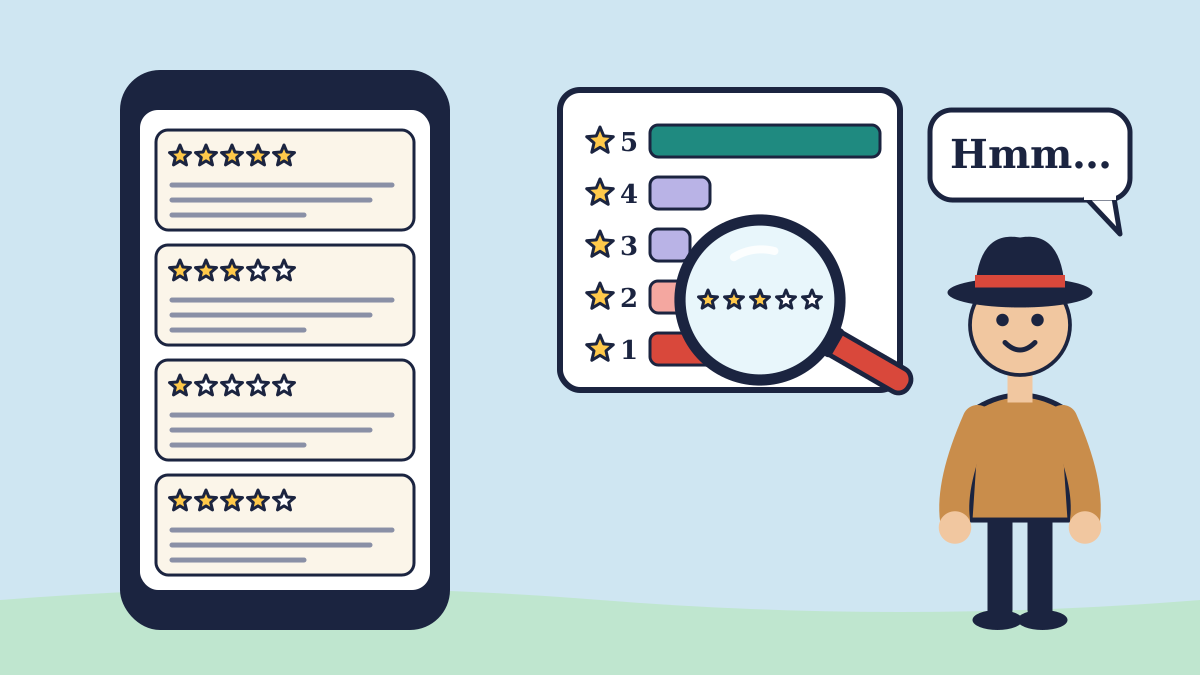
How to read online reviews without being fooled
A practical method for reading product and service reviews critically: the rating spread, the three-star test, recency, reviewer history and complaint patterns. Open the case file →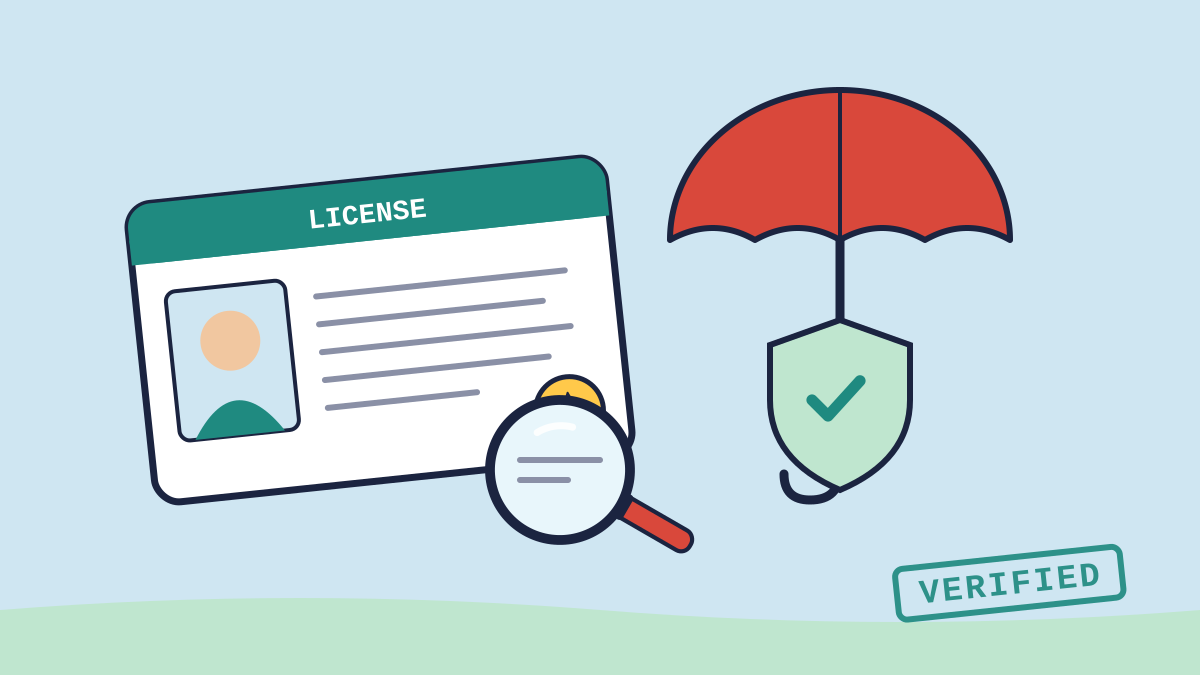
Hiring & renting
How to check a professional's licence and insurance
How to verify licences, registrations and insurance for contractors, electricians, gas engineers, agents, financial advisers and other professionals in the US and UK. Open the case file →
Shops & sellers