
Home Articles Reviews & records
Reviews & records
How to spot fake reviews: the warning signs
Fake reviews are banned in more places than ever, but they have not disappeared. These are the patterns that give them away.
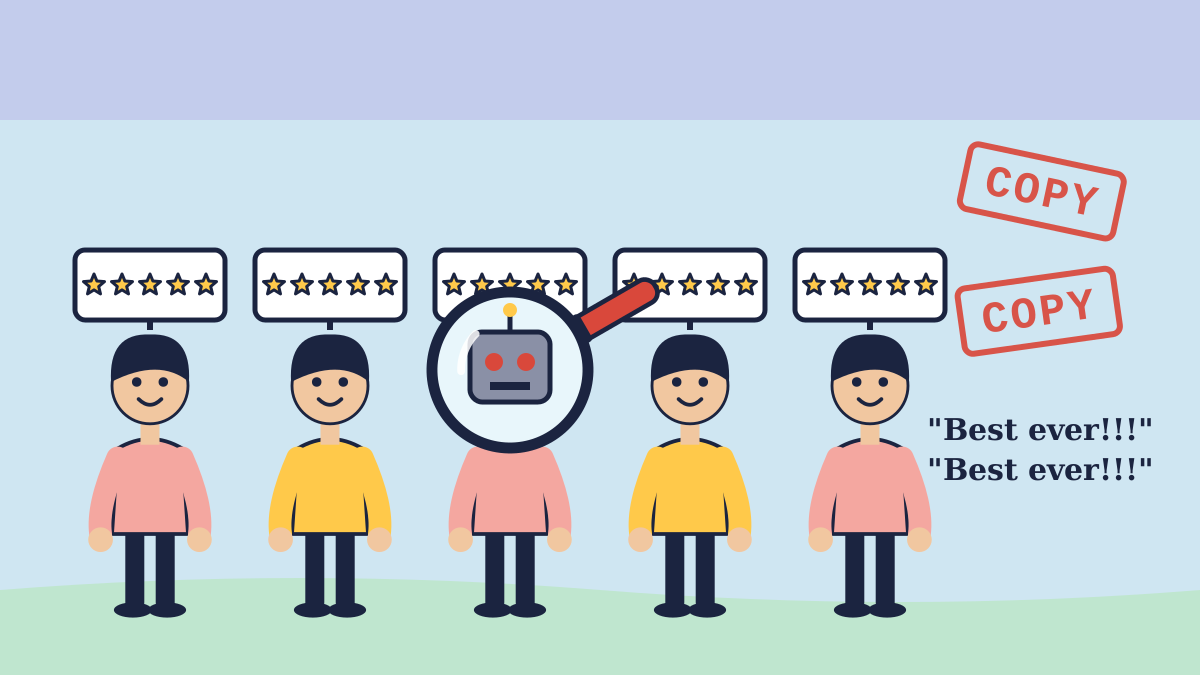
A fake review is any review that does not reflect a genuine customer’s honest experience: reviews written by the business or its staff, reviews bought from a broker, reviews posted in exchange for a refund or gift, and negative reviews planted on a competitor. They are designed to be hard to spot one at a time. The good news is that they are much easier to spot in groups, because fakes are usually produced in batches and batches leave patterns.
The patterns that give fakes away
No single sign proves a review is fake. Look for several of these together, especially clustered around the same listing or business.
- Timing bursts. Dozens of reviews arriving within a few days, often soon after a listing appears, followed by silence. Genuine reviews usually trickle in at a pace that follows sales.
- Vague superlatives. “Amazing product, best purchase ever, highly recommend!” with no detail about how it was used, how long it lasted or what it replaced. Real reviewers tend to mention specifics, including small annoyances.
- Repeated phrasing. The same unusual phrase, the full product name written out in the same way, or the same structure repeated across different reviewers.
- Thin reviewer histories. Accounts with very few reviews, all five stars, often for unrelated products from the same small group of sellers, or all posted on the same day.
- Mismatched details. Praise for features the product does not have, or reviews that clearly describe a different item.
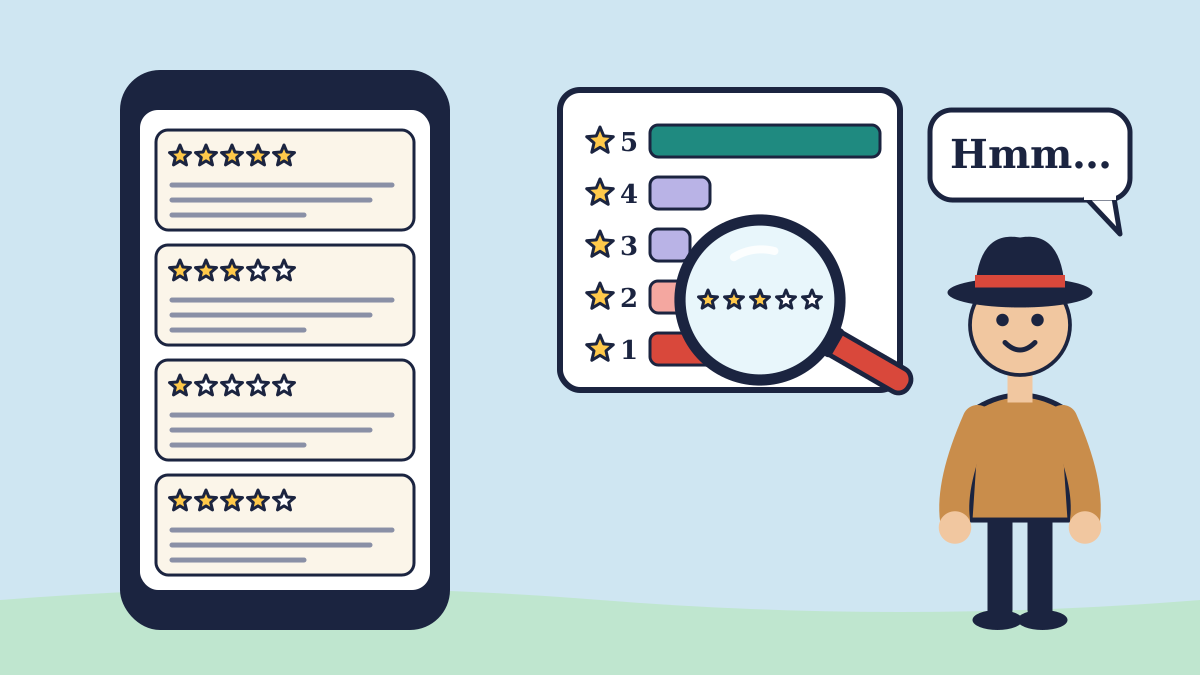
- Missing middle. Plenty of five-star reviews, a handful of angry one-stars, and almost nothing in between.
- Off-platform nudges. Reviews urging you to contact the seller directly, visit another website, or “message for a discount”.
Incentivised reviews and review gating
Some manipulation is subtler than outright fakes. A card in the box offering a refund, gift card or free product in exchange for a five-star review produces reviews from real buyers that are anything but independent. Review gating is when a business asks customers whether they were happy first, and only invites the happy ones to post publicly. Both tilt the average upward while each individual review looks genuine.
If you received a product with an offer like that, it is worth reporting to the platform. On most large marketplaces, offering a reward conditional on a positive review breaks the platform’s rules, and in the US and UK it can also break the law.
What the rules say
In the United States, the Federal Trade Commission finalised a rule on consumer reviews and testimonials that took effect in October 2024. Broadly, it prohibits businesses from creating or buying fake reviews (including ones attributed to people who do not exist or who did not use the product), from paying for reviews that must be positive or negative, from publishing undisclosed reviews by their own officers or managers, from running supposedly independent review sites they actually control, and from using threats to suppress negative reviews. It also covers buying fake social-media indicators such as followers. The FTC can seek civil penalties for violations.
In the United Kingdom, the Digital Markets, Competition and Consumers Act 2024 added fake reviews to the list of banned practices from April 2025. Commissioning, publishing or facilitating fake reviews, and presenting reviews in a misleading way — for example hiding negative ones — is prohibited, and platforms that host reviews are expected to take reasonable steps to prevent and remove them.
These laws make fakes riskier for businesses, but enforcement takes time and many fakes come from sellers outside either country. Treat the law as a backstop, not a filter.
Fake-review spot check: tick what you see
- Most reviews arrived in a short burst of days or weeks.
- Reviews are short, gushing and free of specific detail.
- The same phrases or product name wording repeat across reviewers.
- Reviewer profiles are new, sparse or all five stars.
- Reviews mention features or items that do not match the listing.
- Almost no two-, three- or four-star reviews.
- The package included an offer in exchange for a review.
What about AI-written reviews?
Text generators make it cheap to produce reviews that are grammatically perfect and varied in wording, which defeats the old tell of broken English or copy-paste duplicates. The other patterns still work, because a generated review still has to be posted by an account, at a time, on a listing. Timing bursts, thin reviewer histories and a missing middle are behaviours, not writing styles, and they are harder to disguise. Be cautious of online tools that claim to grade a listing’s review authenticity with a single score; they can be a useful prompt, but they are estimating, and their methods are rarely transparent.
Fake negative reviews exist too
Competitors and disgruntled insiders sometimes post fake bad reviews. Signs include one-star reviews that describe no actual transaction, accounts that only ever post negative reviews of businesses in the same local trade, and a sudden wave of complaints that do not match the tone of years of history. For local services, a business that responds calmly with a note that it cannot find the customer’s booking is not proof of anything, but it is worth weighing.
What to do when you find fakes
First, discount the listing’s rating and rely on other evidence: independent forums, complaint records and the middle-rated reviews that look genuine. Second, report the reviews using the platform’s reporting tool; platforms rely on these flags. If a seller offered you something in exchange for a review, you can report that to the FTC at ReportFraud.ftc.gov in the US, or to the Citizens Advice consumer service in the UK, which passes information to Trading Standards. Finally, if the whole seller feels fabricated, run the checks in our guide to telling whether an online store is legit before you pay anything.
Frequently asked questions
Can I tell for certain that a single review is fake?
Rarely. Individual fakes are designed to look ordinary. Patterns across many reviews — timing, wording, reviewer histories — are much more reliable than judging one review in isolation.
Are reviews from people who got a free product fake?
Not if they are honest and clearly disclosed. They are, however, more likely to be positive, so give them less weight than reviews from people who paid.
Is it illegal for a company to ask me for a review?
Asking for honest reviews is generally fine. Problems arise when the business offers a reward only for positive reviews, only asks happy customers, or writes the reviews itself.
Where should I report a fake review?
Use the platform's own report button first. In the US you can also report to the FTC; in the UK, to the Citizens Advice consumer service.
Related articles
Reviews & records
How to read online reviews without being fooled
A practical method for reading product and service reviews critically: the rating spread, the three-star test, recency, reviewer history and complaint patterns. Open the case file →
Shops & sellers
Is this online store legit? A step-by-step check
How to tell whether an unfamiliar online shop is real: web address, domain age, contact details, reviews off-site, return policies, payment options and scam patterns. Open the case file →
Reviews & records